



Olivia’s story
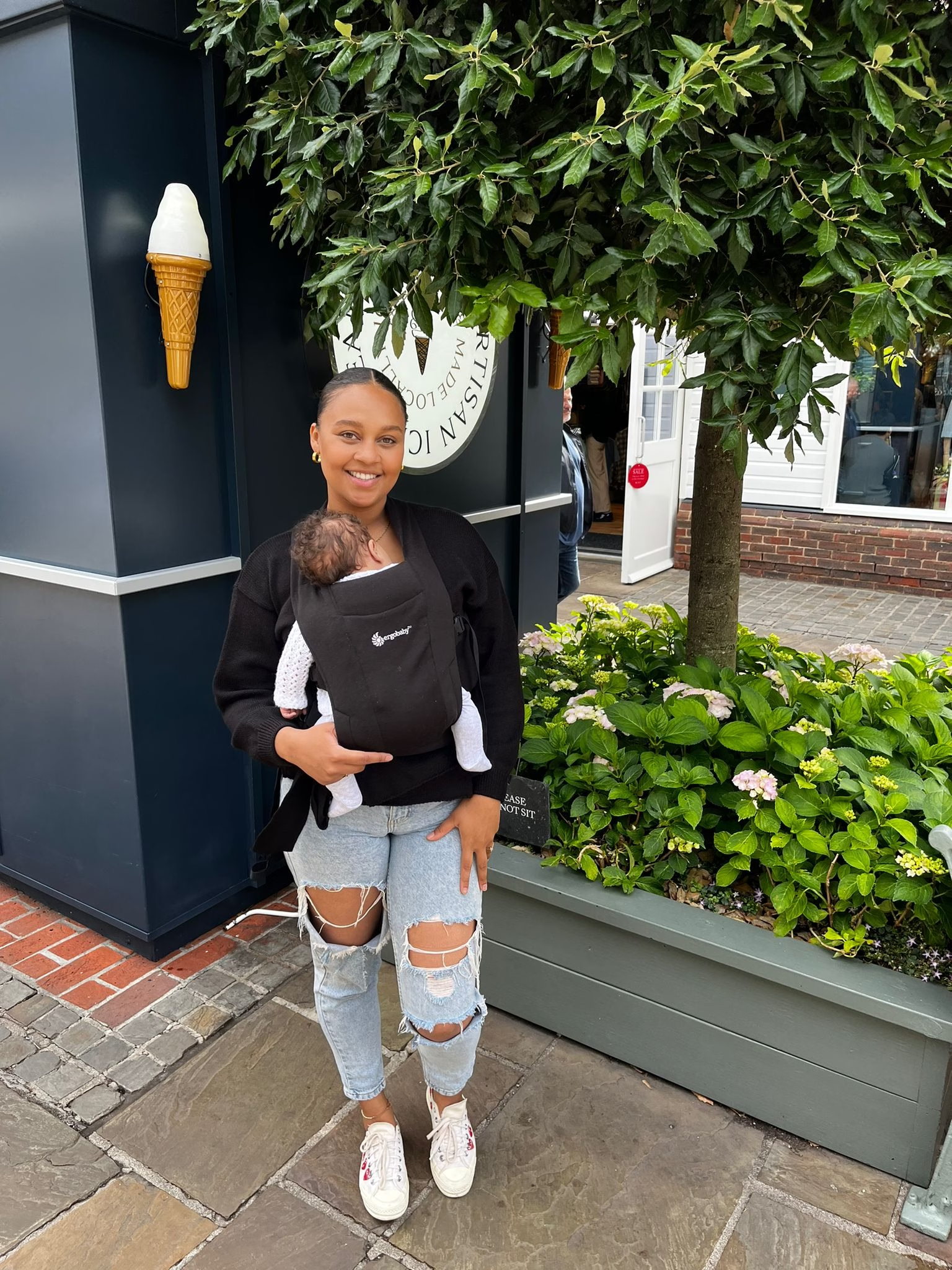
Olivia and her partner, Troy, were delighted when they found out Olivia was expecting, and after a healthy pregnancy, they were eager to welcome their new baby into the world. But when Olivia’s waters broke, the birth didn’t go as anyone had imagined.
Olivia was taken to our Women’s Hospital, but after 48 hours of difficult labour, doctors assessed that her baby’s vital signs were deteriorating. Olivia was rushed into theatre, where doctors decided to perform an emergency C-section and her baby son, Louie, was born.
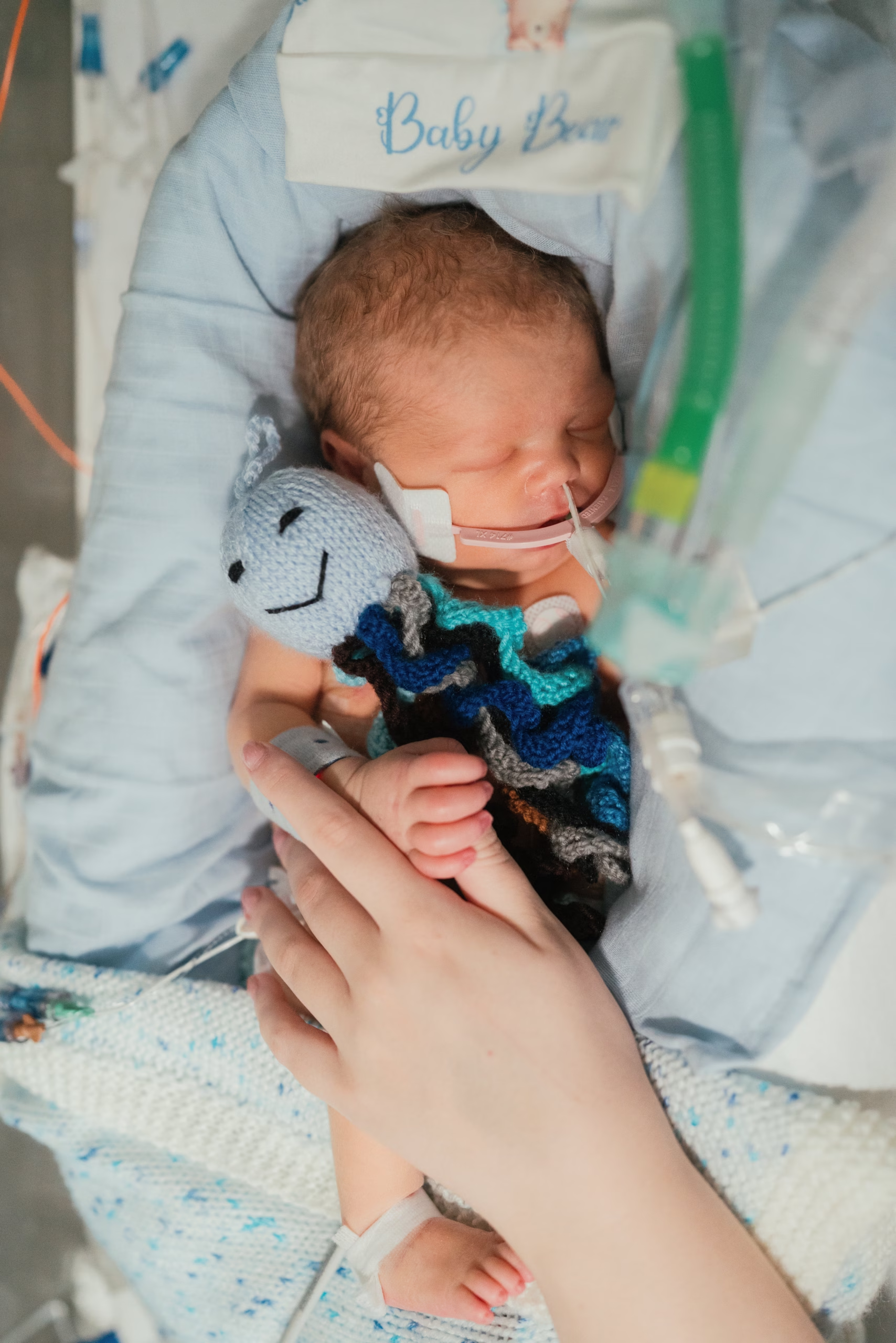
Emotionally and physically drained, Olivia longed to rest, recover and spend time with her tiny newborn son. But when Louie brought up green vomit immediately after birth, doctors were concerned and broke the news to a terrified Olivia that her baby would need an urgent MRI scan of his digestive system to diagnose if anything was seriously wrong.
Currently, because there is no MRI scanner at the Women’s Hospital, poorly babies are transferred to Birmingham Children’s Hospital for their scan, accompanied by a doctor and nurse in a critical care ambulance.
Already traumatised by her birth experience, Olivia was faced with the agonising prospect of her fragile newborn son being ripped apart from her. She comments: “After the trauma of giving birth, the thought of being separated from Louie was too much. I didn’t know how poorly he was, how long he was going to be away from me – the uncertainty of it all took a real toll on me, mentally.”
The following day, baby Louie was transferred to our hospital’s Neonatal Intensive Care Unit (NICU), to be taken to Birmingham Children’s Hospital for his MRI scan. Thankfully, Louie’s dad was able to travel with him for the scan, however having to leave Olivia, while she was so vulnerable herself, was a decision no partner should have to make. Olivia says: “Troy was already sick with worry, having watched me go through a difficult birth. He didn’t want to leave me alone – it was really hard on him.”
After the scan, Louie was taken back to our hospital’s NICU, being closely monitored by medical professionals. Fortunately, the results of the MRI scan were able to show that nothing was seriously wrong with Louie, and the vomiting had been caused by the long and difficult birth, meaning three days after giving birth, mum and baby were able to go home.
Louie is now three years old and while Olivia is grateful that her son is happy and healthy, she still lives with the pain of what happened when he was born. “I really did struggle, especially in those first few weeks. I had terrible flashbacks of the birth and Louie being in NICU. Even to this day, I still carry the trauma with me.”
Olivia feels that having a scan at our hospital would have made all the difference to her experience. “Having the knowledge that Louie was nearby and so we wouldn’t be parted for long would have provided some reassurance and comfort to me. Plus, it might have meant we were able to get scan results back quicker, so he was on NICU for a shorter time. It would have been so much less scary.”
An MRI scan can help diagnose serious conditions in very poorly babies, including cardiac and brain injuries. However, due to the risks involved, currently only approximately 50 neonatal babies are deemed ‘well enough’ to be transferred to Birmingham Children’s Hospital for an MRI scan each year.
Having an MRI scanner on site at our hospital will increase the number of unwell babies that can be scanned, helping to improve outcomes and the treatment offered to every tiny baby on Intensive Care, while preventing the pain of families being separated.
Be Part of Olivia’s Story of Change
Help us transform the experience for women like Olivia today.